



i NEWS PAK-CHINA
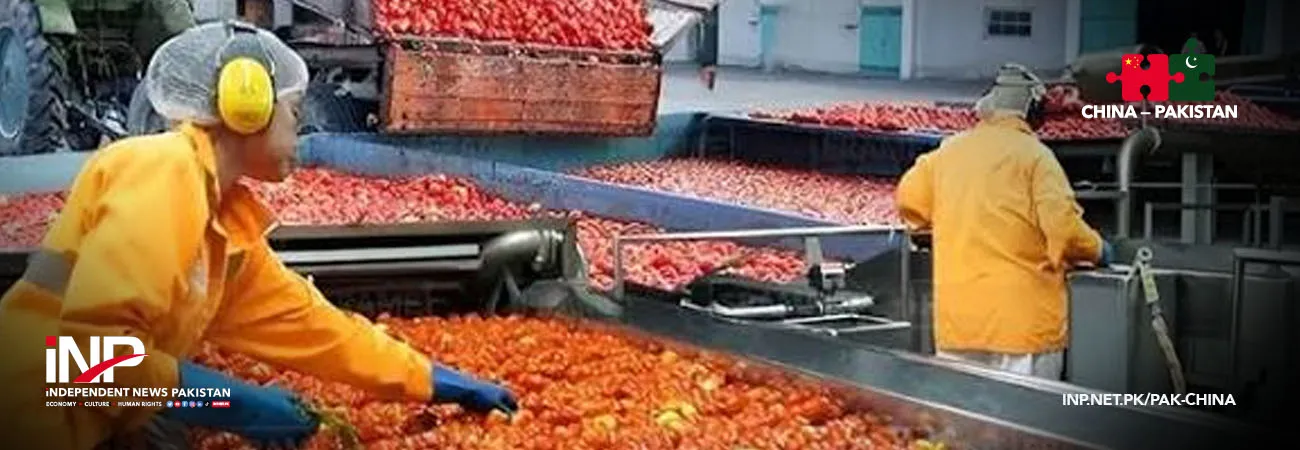
Pakistan, China sign MoU to develop industrial tomato varietiesBreaking
June 09, 2026
In a major step towards deepening Pakistan-China agricultural cooperation, Beijing Jingwa Agricultural Science and Technology Innovation Center (Jingwa Center) and Pakistan’s Iftekhar Ahmed Food and Beverages Pvt. Ltd. have signed a landmark Memorandum of Understanding (MoU), Gwadar Pro reported on Tuesday.
It aimed at developing and introducing high-yield, industrial-grade tomato varieties tailored specifically to Pakistan’s agricultural conditions and processing industry.
The agreement was signed during the Pakistan-China Information Technology, Telecom, Battery Energy Storage System (BESS), and Agriculture Business-to-Business (B2B) Investment Conference held in Hangzhou, China, on the sidelines of Prime Minister Shehbaz Sharif’s official visit, according to an official statement.
Under the agreement, the Chinese research institution will provide specially developed tomato varieties designed for industrial processing.
These varieties possess characteristics highly sought after by food processing industries, including elevated Brix levels, higher solids content, improved pulp yield, and enhanced suitability for producing premium-quality tomato paste, puree, and other value-added tomato products.
Officials said the collaboration will initially focus on a comprehensive research and development programme in Sindh, one of Pakistan’s key agricultural regions. During this phase, six to seven promising tomato varieties developed by Chinese scientists will undergo extensive field testing and greenhouse trials to assess their performance under local conditions.
Agricultural experts from both countries will work closely together to evaluate the adaptability of the varieties to Pakistan’s climate, soil composition, irrigation systems, cultivation methods, and disease pressures.
The joint research effort is expected to ensure that only the most suitable and productive varieties are selected for large-scale cultivation.
Beyond seed development, the agreement encompasses the transfer of modern agricultural technologies and cultivation techniques from China to Pakistan. Jingwa Center will provide technical assistance, agronomic expertise, and scientific support to help improve productivity, crop management practices, and overall tomato quality.
The collaboration also places particular emphasis on promoting year-round tomato production through controlled environment agriculture and modern farming systems.
Such measures are expected to reduce seasonal fluctuations in supply, improve productivity, and ensure a stable flow of raw materials to Pakistan’s growing food processing industry.
Following the successful completion of research trials and adaptation studies, the most promising tomato varieties will be registered in Pakistan and introduced for commercial cultivation.
The Chinese side will continue to provide technical support throughout the commercialization process, ensuring effective adoption by local farmers and processors.
Speaking on the occasion, the Pakistani side emphasized that the development of locally adapted industrial tomato varieties could substantially reduce Pakistan’s reliance on imported tomato paste, helping conserve valuable foreign exchange reserves.
According to industry estimates, Pakistan currently spends approximately one million dollars annually on tomato paste imports, a figure that could be significantly reduced through increased domestic production.
Credit: Independent News Pakistan (INP) — Pak-China
Related News