


INP-WealthPk
China-backed tomato initiative could strengthen Pakistan's food processing industry
July 03, 2026
By Azam Tariq
The recent memorandum of understanding (MoU) between Beijing's Jingwa Agricultural Science and Technology Innovation Center and Pakistan's Iftekhar Ahmed Food & Beverages to develop industrial-grade tomato varieties could strengthen Pakistan's food processing industry and reduce its dependence on imported tomato paste, according to experts.
The agreement, signed during the Pakistan-China Business-to-Business (B2B) Investment Conference in Hangzhou, envisages field trials in Sindh for six to seven candidate tomato varieties specifically suited for paste and puree production.
The initiative aims to address a long-standing weakness in Pakistan's tomato value chain. Despite producing approximately 654,000 tonnes of fresh tomatoes annually from around 53,000 hectares, the country continues to rely heavily on imported tomato paste because of limited processing capacity and the absence of industrial-grade tomato varieties.
The collaboration also reflects the growing emphasis on agricultural cooperation under CPEC 2.0. Earlier this year, Pakistan and China signed 79 agricultural MoUs worth $4.5 billion during the Pakistan-China Agriculture Investment Conference in Islamabad, according to the Press Information Department.
According to the Federal Committee on Agriculture, Pakistan's tomato production for 2024-25 increased by 8.8% over the previous year. However, processing infrastructure has not expanded at the same pace as production, forcing food manufacturers to depend on imported tomato paste despite rising domestic output.
Experts believe the Jingwa partnership offers a scalable pathway for reducing Pakistan's dependence on imported tomato paste while strengthening domestic food processing. If implemented successfully, the initiative could become an early example of how CPEC 2.0's agricultural cooperation can translate technology transfer into import substitution, higher-value processing and stronger agri-industrial competitiveness.
Speaking with Wealth Pakistan, Tanvir Iqbal, Chief Executive Officer and Managing Director of MDC Taste (Pvt) Ltd, an Islamabad-based manufacturer of ketchup, soy sauces and pickles, described the agreement as an encouraging step for the country's food processing industry.
"The MoU is a good omen for Pakistan's tomato industry because we used to import tomatoes from Iran for ketchup production," he said.
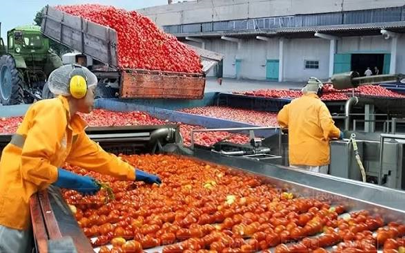
Iqbal said importing 200-kilogram drums of tomato pulp and paste had become increasingly expensive, while regional instability had added further uncertainty to supplies. He believes the new partnership with China could help establish a stronger domestic tomato-processing industry.
He added that manufacturers across the sector are optimistic about the initiative, with his company already planning to import automated tomato-processing machinery, including crushers, from China.
However, he stressed that Pakistan should use the partnership not only to develop industrial tomato processing but also to acquire broader agricultural technologies and expertise from China to modernize the country's agriculture sector.
Beyond the immediate commercial benefits, experts say the agreement also addresses deeper structural weaknesses in Pakistan's agricultural value chain.
Mujtaba Arshad, Research Associate at the CPEC Centre of Excellence, told Wealth Pakistan that the Jingwa agreement directly targets one of Pakistan's most persistent food-processing challenges.
"Pakistan's dependence on imported tomato paste is a well-documented structural weakness," he said. "The country historically imports nearly $10 million worth of tomato paste annually, creating a concentrated import dependency that is both commercially expensive and strategically fragile."
Arshad explained that the country's dependence stems less from limited agricultural production than from the absence of industrial tomato varieties and integrated processing facilities.
He said industrial tomato varieties are specifically developed for processing. Their higher Brix content increases solids yield while reducing energy consumption during paste production. Thick skin, firm flesh and uniform ripening make them suitable for mechanized harvesting, while improved disease resistance enables them to perform better under Sindh's warm and humid growing conditions.
"Pakistan's current tomato sector is largely built around fresh-market varieties that perform poorly when processed," he said. "Introducing Chinese research-grade industrial varieties can transform the input economics of the entire processing chain."
Arshad noted that the project also builds on the broader agricultural cooperation framework established under CPEC. Pakistan and China signed an MoU on agricultural cooperation in November 2018, creating a Joint Working Group (JWG) focused on capacity building, product processing, technology extension and market information.
He recommended establishing a dedicated national programme for industrial tomato development, including a fast-track seed registration mechanism under the Federal Seed Certification and Registration Department, legislation to protect contract farming arrangements between growers and processors, and public-private matching grants linked to verified import-substitution targets.
Credit: INP-WealthPk
Related Articles