


INP-WealthPk

China’s battery boom offers Pakistan opening in EV manufacturing
May 18, 2026
By Qudsia Bano
China’s rapid expansion in electric vehicle (EV) and battery manufacturing is creating a timely industrial opportunity for Pakistan as Islamabad moves to localise new energy vehicle (NEV) production, reduce fuel imports and establish a domestic battery value chain.
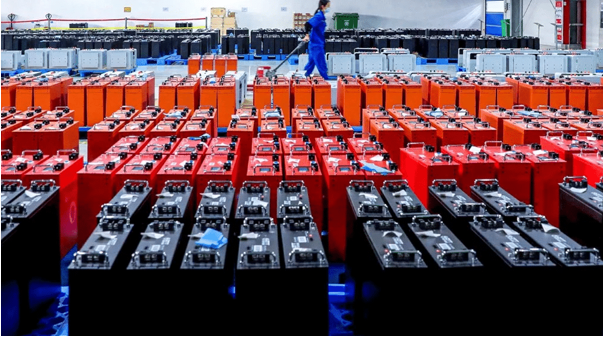
According to the International Energy Agency (IEA), global battery manufacturing capacity increased by nearly 30 percent in 2024 to more than 3TWh, while around 85 percent of global battery cell manufacturing capacity was concentrated in China. Chinese producers also controlled over 75 percent of global battery manufacturing capacity, highlighting Beijing’s dominant position in the global clean mobility supply chain.
The IEA further reported that global electric car production reached 17.3 million units in 2024, with China producing 12.4 million units and accounting for more than 70 percent of total output. The trend presents Pakistan with an opportunity to attract Chinese technology, component suppliers and battery-pack assembly operations under existing industrial cooperation frameworks.
Pakistan’s National Electric Vehicle Policy 2025–30 aims to ensure that 30 percent of all new vehicle sales are electric by 2030. According to government estimates, the transition could save 2.07 billion litres of fuel annually, generate nearly $1 billion in foreign exchange savings, reduce carbon emissions by 4.5 million tonnes and lower health-related costs by approximately $405 million per year.
The policy has already begun generating industrial momentum. The final NEV policy document states that by July 2025, a total of 65 manufacturers had obtained certificates to locally produce electric two- and three-wheelers, while the number of electric vehicles in the country increased from 567 in 2021 to more than 80,000 by June 2025.
Pakistan’s case for accelerating EV adoption is also supported by rising import pressures. According to the Pakistan Economic Survey 2024-25, petroleum product demand increased by 7 percent during July-March FY2025, with the transport sector accounting for nearly 80 percent of total consumption. This makes battery-powered transport not only an environmental consideration but also an important economic and foreign exchange priority.
Industry stakeholders believe Pakistan should avoid limiting itself to importing finished electric vehicles. Khalid Hussain, Manager Payroll and Sales at BYD Pakistan, said the country’s real opportunity lies in developing a broader industrial ecosystem around electric mobility, including battery packs, charging systems, controllers, wiring harnesses and software-driven after-sales services.
He said China’s expansion in battery manufacturing could help Pakistan accelerate progress if local companies are integrated into assembly operations and component supply chains rather than remaining limited to import-based business models. He added that localisation would become commercially meaningful only when Pakistan develops skilled technicians, testing facilities and safety standards for lithium-ion battery handling.
A Rawalpindi-based auto-parts production manager said Pakistan’s existing engineering capabilities provide a practical foundation for manufacturing battery casings, mounting systems, connectors and light electric vehicle components. He noted that the initial phase should prioritise battery-pack assembly and battery management systems instead of full-scale cell manufacturing, which requires greater capital investment and advanced chemical-processing capacity.
He further said that while China’s scale can significantly shorten Pakistan’s learning curve, policy consistency will determine whether investors view Pakistan as a credible destination for EV manufacturing. Predictable tariff structures, local testing laboratories and vendor financing mechanisms, he added, are more important for smaller suppliers than headline announcements.
Experts believe Pakistan could benefit most by positioning itself in selected segments of the battery value chain. The Ministry of Industries’ NEV draft policy notes that Pakistan already possesses an industrial base in traction motors, electrical and electronic equipment, ancillary modules, battery systems and IT/IoT technologies, which could be redirected towards the emerging NEV market.
For Pakistan, China’s battery expansion is therefore more than a global clean-energy development. It presents an opportunity to strengthen industrial capacity, reduce oil dependence, support local vendors and create employment opportunities in a sector that is increasingly shaping the future of transport and energy storage.
Credit: INP-WealthPk
Related Articles