




INP-WealthPk

China's expanding services economy opens new opportunities for Pakistan's exporters
July 13, 2026
By Qudsia Bano
China's rapidly expanding digital and knowledge-based services economy is creating fresh opportunities for Pakistani exporters in information technology, artificial intelligence (AI), cloud computing, e-commerce, logistics support and other high-value services, provided Pakistan strengthens its digital capabilities, language skills and business partnerships, experts say.
The opportunity comes as China accelerates the transformation of its services sector while Pakistan's own services exports continue to gain momentum.
According to the Pakistan Bureau of Statistics (PBS), Pakistan's services exports rose 17.38% to US$9.097 billion during July-May FY2025-26 from US$7.750 billion in the corresponding period last year. Services imports increased 8.64% to US$11.099 billion, while the services trade deficit narrowed 24.10% to US$2.002 billion.
Recent monthly data also point to improving performance. In May 2026, Pakistan's services exports increased 15.99% year-on-year to US$838.28 million from US$722.74 million a year earlier, while services imports declined 9.41% to US$807.82 million. As a result, Pakistan recorded a monthly services trade surplus of US$30.46 million.
China's policy direction reinforces these opportunities. In April 2026, Beijing issued new guidelines to expand the scale and quality of its services sector, targeting an industry worth 100 trillion yuan (about US$14.58 trillion) by 2030. The strategy prioritises science and technology services, software and information technology, modern logistics, healthcare, elderly care, childcare, culture, tourism and sports-related services.
The services sector has become the main driver of China's economy. In 2025, it accounted for 57.7% of gross domestic product (GDP), contributed 61.4% to economic growth and provided around half of total employment.
Recent data underline the sector's continued momentum. According to China's National Bureau of Statistics, the services production index grew 4.9% year-on-year during January-April 2026 and 4.4% in May. Information transmission, software and information technology services remained among the fastest-growing segments, while online retail sales of services reached 3.0459 trillion yuan during January-May, up 7.6% year-on-year.
China's external services trade is also expanding. During January-May 2026, the country's total trade in services increased 6% year-on-year to nearly 3.1 trillion yuan. Knowledge-intensive services trade rose 5.4% to 1.37 trillion yuan, accounting for 44.2% of total services trade, while exports of knowledge-intensive services climbed 12.2%.
For Pakistan, these trends point to growing opportunities to align its services exports with China's rising demand for digital, technology-intensive and knowledge-based services.
Speaking with Wealth Pakistan, Muhammad Toqeer, IT Manager at Pakistan IT Solutions, said China's growing demand for software development, cloud computing, AI localisation and business-process services could benefit Pakistan if local firms move beyond conventional outsourcing.
"Pakistani companies have a cost advantage and an English-speaking workforce, but they also need Chinese-language capability, a better understanding of data compliance and stronger partnerships with Chinese technology platforms," he said.
According to Toqeer, collaboration with Chinese cloud, e-commerce and fintech companies could enable Pakistani firms to provide software modules, AI training datasets, customer support, business-process outsourcing and back-office services for regional markets.
Recent Pakistan-China engagements reflect this direction. During April and May 2026, Pakistan's Ambassador to China, Khalil Hashmi, visited Ningbo to promote business-to-business investment and industrial cooperation, while encouraging Chinese participation in the Pakistan-China B2B Investment Conference on ICT held in Hangzhou.
Pakistan and Zhejiang Province also agreed to expand cooperation in the digital economy, e-commerce, information technology, telecommunications, advanced manufacturing, renewable energy and skills development. The two sides also witnessed the signing of a memorandum of understanding between Hangzhou Normal University and the Embassy of Pakistan in Beijing to establish the China-Pakistan Joint Technology Research Centre.
Digital cooperation gained further momentum when Pakistan and Alibaba Group signed a strategic framework covering AI, cloud computing, digital trade, SME development, fintech and healthcare innovation. Under the agreement, Ignite and Alibaba Cloud will jointly develop localised AI models for Urdu and regional languages, train 500,000 people in digital skills and organise AI hackathons. Alibaba and SMEDA will also onboard at least 2,000 Pakistani SMEs to a dedicated "Pakistan Pavilion," while Koko Tech will introduce a Buy Now, Pay Later solution in Pakistan with an initial investment of US$3 million.
Experts believe Pakistan's next phase of export growth should increasingly focus on services alongside traditional merchandise trade. They say that by strengthening digital skills, improving regulatory compliance, expanding language capabilities and building partnerships with leading Chinese technology companies, Pakistan can position itself to capture a greater share of China's fast-growing services economy while diversifying its export base and generating higher-value foreign exchange earnings.
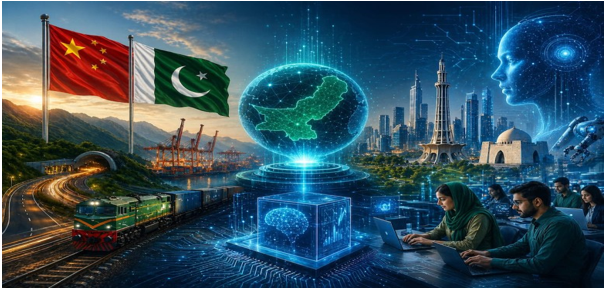
Credit: INP-WealthPk
Related Articles


