


INP-WealthPk

South Korea's industrial strategy offers roadmap for Pakistan's manufacturing revival
July 13, 2026
By Qudsia Bano
South Korea's latest high-tech industrial investment programme offers valuable lessons for Pakistan as it seeks to revive manufacturing, diversify exports and build a more technology-driven industrial base, experts say.
The discussion follows Seoul's announcement of a 312 trillion won (about US$195-200 billion) investment programme that will transform the Yeongnam region into a hub for artificial intelligence (AI), semiconductors, advanced mobility, aerospace, robotics and clean energy.
The initiative will be led by six of South Korea's largest conglomerates—Samsung, SK Group, Hyundai Motor Group, Hanwha, LG and Doosan—with government support to strengthen industrial competitiveness while reducing regional economic disparities.
According to South Korea's development blueprint, SK Group will invest 140 trillion won in AI data centres, Samsung 60 trillion won in batteries, humanoid robots and AI infrastructure, Hanwha 55 trillion won in aerospace and defence technologies, Hyundai Motor Group 42 trillion won in manufacturing AI and autonomous mobility, LG 9.4 trillion won in electronics and semiconductor substrates, and Doosan 5.1 trillion won in small modular reactors and advanced energy systems.
The programme builds on Seoul's broader industrial strategy. In 2025, South Korea launched a 50 trillion won High-Tech Strategic Industry Fund through the Korea Development Bank to provide long-term financing for semiconductors, artificial intelligence, robotics, biotechnology and advanced battery industries, helping domestic manufacturers remain globally competitive amid rapidly changing technologies and supply chains.
For Pakistan, the Korean approach highlights the importance of combining long-term industrial planning with technology investment and close coordination between government and the private sector.
According to the Pakistan Economic Survey 2025-26, Pakistan's industrial sector grew by 3.51% during FY2025-26, supported mainly by a recovery in large-scale manufacturing (LSM), which expanded by 6.11% after contracting by 0.69% a year earlier. Growth was led by automobiles (61.66%), transport equipment (39.93%), furniture (20.45%) and electrical equipment (11.87%), although pharmaceuticals and machinery remained under pressure.
However, Pakistan's external trade figures continue to reflect structural weaknesses. Pakistan Bureau of Statistics data show exports during July-May FY2025-26 declined 5.6% year-on-year to US$27.904 billion, while imports rose to US$62.66 billion, widening the trade deficit to US$34.76 billion during the first eleven months of the fiscal year. The figures underscore the country's continued dependence on imported industrial inputs and its relatively narrow export base.
Speaking with Wealth Pakistan, Rida Batool, Officer Digital Industry Affairs at the Ministry of Information Technology, said Pakistan's industrial policy has largely focused on addressing immediate business concerns such as energy tariffs, financing costs and taxation.
She said that while these measures remain important, future export competitiveness will increasingly depend on greater investment in technology, automation, research and development, skilled human resources and integrated industrial clusters.
Batool noted that South Korea's latest initiative demonstrates the value of aligning government policy with long-term private-sector investment instead of relying mainly on short-term incentives.
She said Pakistan may not be able to match South Korea's financial scale, but the broader policy framework remains highly relevant.
According to her, prioritising technology-intensive manufacturing, encouraging long-term private investment, strengthening industrial clusters, expanding collaboration between universities and industry, and maintaining policy continuity could significantly improve Pakistan's industrial competitiveness and export performance.
Experts believe the global manufacturing landscape is increasingly being shaped by AI, advanced electronics, automation and clean technologies. They say Pakistan can strengthen its position by shifting from short-term industrial support towards a long-term strategy centred on innovation, technology adoption, skilled workforce development and closer public-private collaboration—an approach that has underpinned South Korea's emergence as one of the world's leading manufacturing economies.
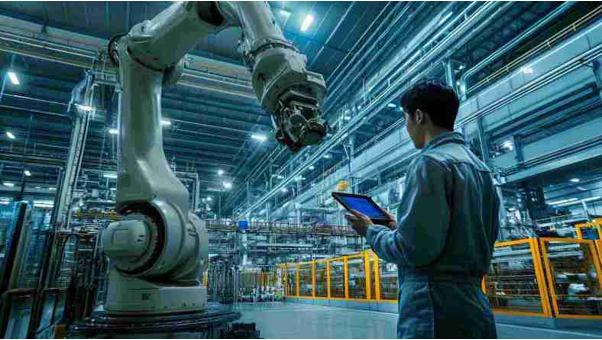
Credit: INP-WealthPk
Related Articles