


INP-WealthPk

China's global governance vision could expand Pakistan's economic opportunities
July 03, 2026
By Azam Tariq
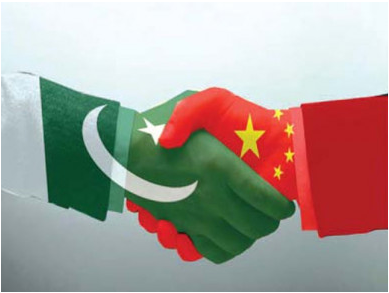
China's pursuit of a more just and equitable global governance order could create new economic opportunities for Pakistan, paving the way for enhanced regional connectivity, broader trade networks and deep development cooperation. Even so, experts stressed that domestic reforms and regional stability would be crucial to translating those opportunities into tangible gains.
The discussion follows the June 17 release by China's State Council Information Office of a white paper titled More Just and Equitable Global Governance: China's Principles, Proposals and Actions, which outlines Beijing's vision for reforming global governance through multilateralism and inclusive economic globalization.
The white paper highlights the Global Governance Initiative (GGI), which has gained support from nearly 160 countries and international organizations, with more than 60 countries joining the Group of Friends of Global Governance.
Pakistan occupies a notable position within this evolving framework as the host of the China-Pakistan Economic Corridor (CPEC), the flagship project of China's Belt and Road Initiative (BRI), providing the country with an established platform for regional connectivity and economic cooperation.
According to the Pakistan China Joint Chamber of Commerce and Industry (PCJCCI), CPEC has attracted more than $25.9 billion in direct investment, created over 260,000 jobs and added more than 8,000 megawatts to Pakistan's electricity generation capacity.
Analysts believe these existing economic linkages could allow Pakistan to benefit more quickly if China's governance proposals translate into expanded regional cooperation, infrastructure investment and development partnerships.
They are of the opinion that China's global governance agenda presents Pakistan with an opportunity to strengthen exports, attract investment and deepen regional economic integration. They emphasized, however, that realizing these gains would depend on sustained improvements in security, governance, industrial competitiveness and regional cooperation, enabling the country to convert strategic alignment into measurable economic outcomes.
Speaking with Wealth Pakistan, Imran Khan, geopolitical analyst and Senior Fellow at the National Dialogue Forum (NDF), said China's expanding role in global development and governance presents new opportunities for developing countries, particularly those already participating in the BRI.
He said Pakistan's participation in CPEC places the country in a favourable position to benefit from the GGI.
"Since Pakistan has been a part of the BRI's flagship CPEC project, it has a real advantage over other developing countries," he said.
However, Khan cautioned that Pakistan's internal security challenges and a rent-seeking economy dominated by bureaucratic inefficiencies and vested interests could limit its ability to capitalize on these opportunities.
He said Pakistan must undertake governance reforms to ensure that strategic cooperation translates into inclusive economic growth rather than remaining confined to infrastructure investment.
On regional connectivity, Khan stressed that Pakistan should align its economic strategy with China's broader vision linking South Asia, Central Asia and West Asia. He added that lasting peace in Balochistan, Khyber Pakhtunkhwa and Afghanistan would remain essential for realizing the country's ambition of becoming a regional trade and transit hub.
Dr Yasir Masood, a Pakistani geostrategic analyst and political commentator, told Wealth Pakistan that China's governance vision reflects a structural response to an increasingly multipolar world and seeks to provide developing countries with a stronger voice in global economic decision-making.
"China's vision reflects a broader effort to make global governance more representative of developing countries at a time of growing multipolarity," he said.
Masood said Pakistan could benefit through stronger participation in international economic institutions, expanded regional trade and connectivity, and greater access to development finance, technology transfer and institutional partnerships.
He said Pakistan should deepen regional connectivity through CPEC while expanding economic links with Central Asia, the Middle East and the wider Eurasian region. At the same time, he stressed the need to strengthen industrialization and export competitiveness so that improved connectivity generates sustainable economic growth.
Masood also called for a more active Pakistani role in multilateral platforms focused on promoting development finance and infrastructure cooperation, alongside greater emphasis on South-South trade and investment across Asia, Africa and the Gulf to diversify exports and reduce dependence on any single market.
Credit: INP-WealthPk
Related Articles