




INP-WealthPk
China's human rights action plan offers lessons for Pakistan's social development
July 13, 2026
By Azam Tariq
China's new National Human Rights Action Plan for 2026-2030 offers practical lessons for Pakistan's social development agenda.
Experts underscore the importance of expanding access to education, healthcare, employment, poverty reduction and public services as foundations of inclusive development.
The discussion follows China's release of its National Human Rights Action Plan for 2026-2030 at the opening of the 2026 Forum on Global Human Rights Governance. According to the plan, it aims to safeguard people's fundamental interests, promote social fairness and justice, and ensure that the benefits of modernization are shared more broadly across society.
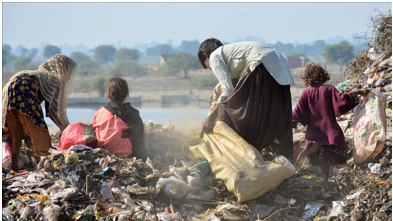
The debate has particular relevance for Pakistan, where improving social development remains a major policy priority. The Pakistan Economic Survey 2025-26 places the national poverty headcount at 28.9% in 2024-25, compared with 21.9% in 2018-19. It also records school attendance among people aged 10 years and above at 67%, while the out-of-school children rate stands at 28%.
The survey further shows that public health expenditure amounted to 0.8% of gross domestic product (GDP) in FY2025. Pakistan's life expectancy reached 67.8 years in 2024, infant mortality stood at 47 per 1,000 live births, and the country had 336,582 registered doctors in 2025. Together, these indicators highlight the scale of investment needed to strengthen access to essential public services.
Speaking with Wealth Pakistan, Shi Yuanqiang, Deputy Head of Mission at the Embassy of the People's Republic of China, said China's development experience demonstrates how improvements in education, healthcare, social security and infrastructure can support broader social progress.
He said China has placed sustained emphasis on expanding access to public services and improving living standards while lifting around 800 million people out of absolute poverty.
According to Shi, Pakistan can draw useful lessons by treating education, employment and effective public service delivery as central pillars of national development and social wellbeing.
Issra Ahuja, gender expert and Strategy Manager at the Peace and Justice Network Pakistan, told Wealth Pakistan that Pakistan could benefit from China's approach of treating access to education, healthcare, employment and social protection as integral components of development rather than simply welfare programmes.
She said greater investment in targeted poverty reduction, quality public services and underserved communities, particularly women and rural populations, could help reduce inequality and strengthen the country's social protection system.
Ahuja also stressed the importance of improving the use of data, adopting more localised poverty-targeting mechanisms and coordinating investment in human development to better support women, rural communities, minorities and low-income households.
She said development planning should be participatory and evidence-based, with stronger representation of women, young people, marginalised communities and civil society organisations in policymaking.
According to Ahuja, economic growth alone cannot deliver inclusive development unless it is accompanied by equitable access to education, healthcare, decent employment and effective public services.
She added that stronger accountability mechanisms and a fairer distribution of public resources would help ensure that development gains translate into broader improvements in people's quality of life.
Experts believe China's latest human rights action plan reinforces the importance of linking economic development with investment in people. For Pakistan, they say, sustained progress will depend not only on economic growth but also on expanding access to quality education, healthcare, employment opportunities and social protection so that development benefits reach all sections of society.
Credit: INP-WealthPk
Related Articles


