



INP-WealthPk
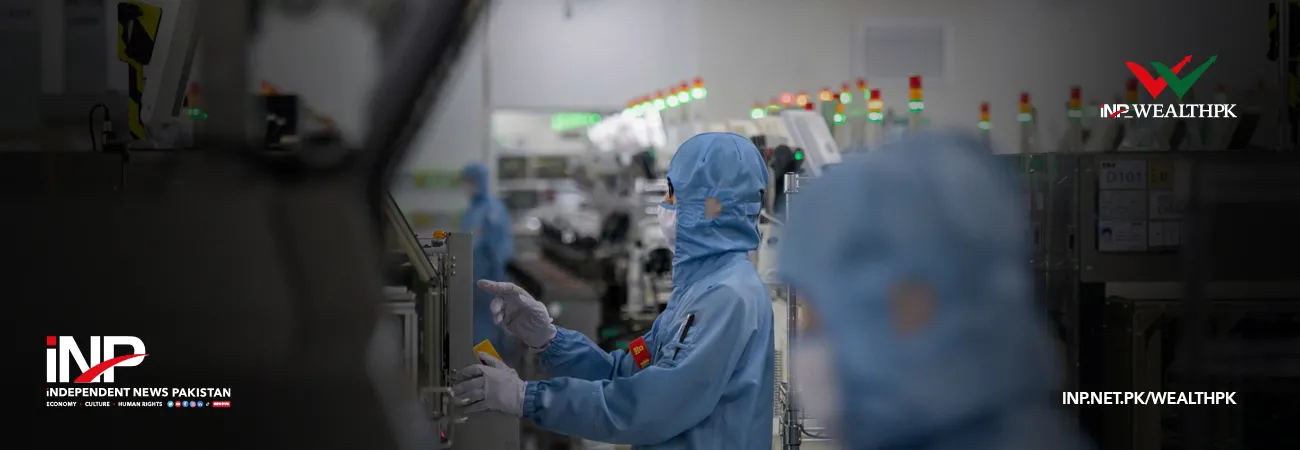
China’s R&D expansion highlights need for stronger research–industry links in Pakistan
March 17, 2026
By Moaaz Manzoor
China’s plan to raise nationwide research and development (R&D) spending by an average of at least 7% annually during 2026–30 highlights the importance of linking research investment with institutions capable of moving ideas into production, technology transfer and industrial application.
The policy direction was set during China’s annual legislative session, where the National Development and Reform Commission presented its report on the implementation of the 2025 plan and the draft plan for 2026.
The report identifies 2026 as the first year of the 15th Five-Year Plan period and places high-quality development, stronger self-reliance in science and technology, and the development of new quality productive forces at the center of policy priorities. It also says China will continue directing a greater share of total R&D spending to basic research while providing stronger, long-term and stable support.
According to the draft outline of the 15th Five-Year Plan, China will maintain average annual R&D spending growth of at least 7% during the 2026–2030 period, the same target adopted in the previous five-year plan, reflecting policy continuity in prioritizing innovation-led development.
Under the 2026 draft plan, China will further optimize the distribution of national platforms and bases for scientific and technological innovation, upgrade national emerging industry innovation centers and industrial technology and engineering centers, and build proof-of-concept and pilot-scale testing platforms in a systematic way. The plan also calls for nurturing technology transfer institutions and high-performing incubators for technology enterprises, expanding the pool of technology managers and improving financial services for science and technology.
The policy framework offers important lessons for Pakistan. The most important point is that higher R&D spending alone may not be sufficient. China’s planning framework combines support for basic research with enterprise participation, pilot testing, technology transfer institutions, incubators, financing mechanisms and skills development. If Pakistan wants research to support productivity, industrial upgrading and technological self-reliance, it will need to develop these supporting institutions alongside increased funding.
Speaking with Wealth Pakistan, Engr. Ahad Nazir, Program Manager at the Sustainable Development Policy Institute, said Pakistan’s weakness lies not only in limited R&D funding but also in the absence of commercialization infrastructure. In his view, the country needs applied research centers, testing and certification laboratories, pilot manufacturing facilities and shared engineering design hubs if research is to be translated into industrial capability.
Research Fellow Asad Ullah Khan at the China Pakistan Study Centre at the Institute of Strategic Studies Islamabad told Wealth Pakistan that Pakistan can draw practical lessons by increasing R&D spending, strengthening research institutions and promoting partnerships between academia and the private sector. He pointed to technology parks, local startups and incentives for scientists and researchers as useful steps toward reducing reliance on imported technology.

Credit: INP-WealthPk
Related Articles