




INP-WealthPk
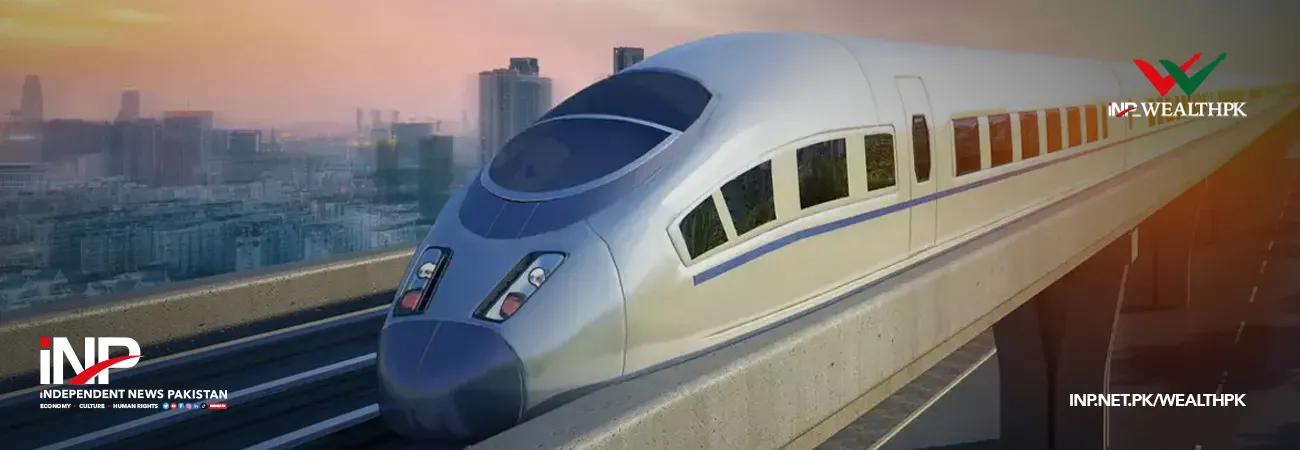
China's tourism train model offers roadmap for Pakistan's hospitality sector
July 13, 2026
By Azam Tariq
Pakistan can draw practical lessons from China's expanding railway tourism strategy to transform its transport infrastructure into a broader tourism ecosystem that supports hospitality, local businesses and regional economic development, experts say.
The discussion follows China's latest policy push to expand railway tourism. According to Xinhua, the Chinese government recently issued a joint notice signed by eight authorities, including the Ministry of Commerce, the Ministry of Culture and Tourism and China State Railway Group, calling for fiscal and financial support for tourism-oriented railway station upgrades, technology improvements for tourism trains, big-data systems to forecast tourist flows, greater private-sector participation and the expansion of cross-border tourism train services.
The initiative has particular relevance for Pakistan, where tourism remains underdeveloped despite the country's rich natural, cultural and religious attractions. According to the Federation of Pakistan Chambers of Commerce and Industry (FPCCI) Policy Advisory Board, travel and tourism contributed 5.9% to Pakistan's gross domestic product (GDP) and supported 4.7 million jobs in 2024. However, the country earned only US$1.15 billion from inbound tourism during the year, compared with the US$2.4 billion spent abroad by Pakistani travellers.
The report further notes that Pakistan ranks 101st on the Travel and Tourism Development Index (TTDI) and captures only 2.2% of South Asia's tourism receipts despite possessing one of the region's most diverse adventure, heritage and religious tourism landscapes.
Speaking to Wealth Pakistan, Ameer Hamza Khan, founder of PaharbyHK, which manages tours, events and corporate travel across Pakistan, said the country should begin by developing practical railway tourism corridors rather than attempting to replicate China's model on a similar scale.
"The best approach is to link existing railway routes with city transport, tourist buses, hotel pick-up and drop-off services, local guides and digital ticketing," he said, citing Rawalpindi-Attock, Lahore-Wagah and Karachi-Hyderabad-Thatta as suitable routes for weekend and family tourism packages.
Khan said Pakistan Railways requires targeted upgrades rather than wholesale expansion. He said tourist-oriented railway stations should provide clean waiting areas, information counters, multilingual signage, food courts and reliable last-mile transport. Selected train services should also offer punctual schedules, online reservations, family-friendly compartments and partnerships with hotels to improve visitors' experience.
He also called for a clear regulatory framework to encourage private-sector participation in tourism trains and station services, along with a data-driven system to monitor tourist demand and seasonal travel patterns so that services can be planned more efficiently.
Zulfiqar Ali, Chief Executive Officer (CEO) of Goomo Joomo Tours and Travels, which organises tours to northern Pakistan and mountain-climbing expeditions, told Wealth Pakistan that Pakistan should introduce dedicated tourism trains and buses for the northern areas as integrated tourism products rather than treating them as conventional public transport services.
According to the FPCCI report, adventure tourism accounts for 45% of Pakistan's tourism activity, with Khyber Pakhtunkhwa contributing 31% and Gilgit-Baltistan 24%. However, the report also identifies frequent blockages on the Karakoram Highway (KKH) and Baltistan Highway as major constraints on tourism growth in the northern regions.
Ali recommended adopting a rail-to-road tourism model in the near term, allowing tourists to travel by train to Rawalpindi, Taxila or Havelian before continuing to the northern areas through dedicated tourist bus services.
He said the proposed Mansehra-Chilas Motorway could become a major catalyst for northern tourism if developed as a complete tourism corridor featuring rest areas, viewpoints, emergency response centres and fuel stations at regular intervals.
Ali also said the planned Pakistan-China railway should be viewed not only as a transport project but also as a long-term tourism opportunity linking China, Gilgit-Baltistan and the rest of Pakistan.
"Pakistan can promote integrated rail-and-road tourism between China, Gilgit-Baltistan and the rest of Pakistan," he said, adding that local tourism operators from Gilgit-Baltistan should play a central role in designing tourism packages because of their understanding of seasonal demand, road conditions and weather patterns.
Experts believe Pakistan does not need to replicate China's railway tourism model in its entirety. Instead, they say a phased strategy combining rail, road, hospitality, digital services and private-sector participation can gradually transform transport infrastructure into a stronger driver of tourism exports, local employment and regional economic development.
Credit: INP-WealthPk
Related Articles


