


INP-WealthPk
Experts say urban forests can help Lahore combat heat and smog
June 02, 2026
By Muhammad Luqman
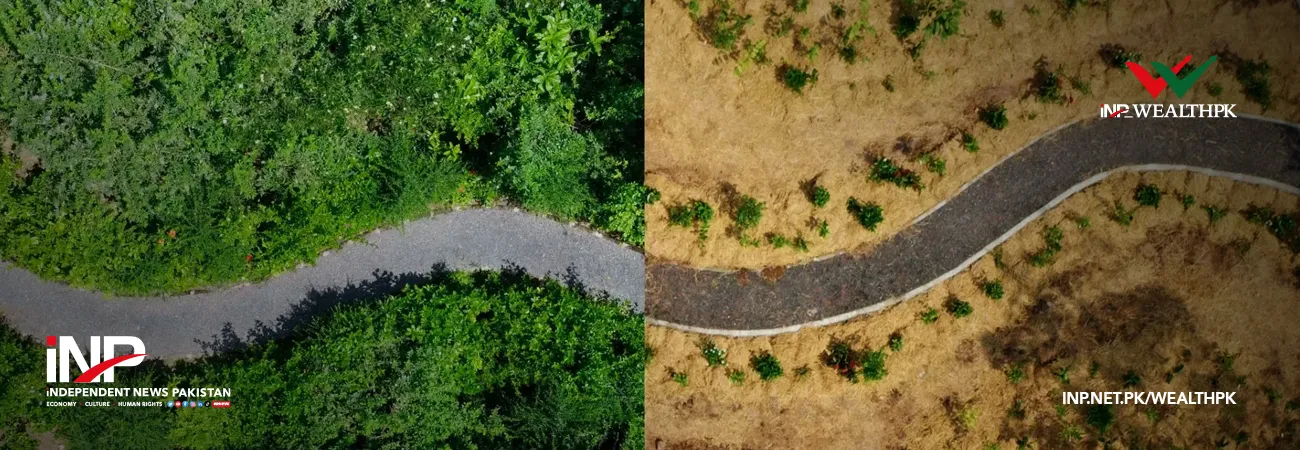
Expanding green cover in Lahore and other major cities can play a critical role in protecting residents from intensifying summer heat and worsening winter smog, as environmental experts increasingly advocate nature-based solutions to tackle climate challenges.
Pakistan continues to experience recurring heatwaves linked to climate change and global warming. Experts warn that weather patterns this year could become more severe, with the El Niño phenomenon expected to contribute to drier conditions and intensify heat stress across the country’s plains.
“Increasing tree cover helps lower urban temperatures through shading and evapotranspiration, reducing the urban heat island effect that often makes cities several degrees warmer than surrounding rural areas,” said Muhammad Ibrahim Khan, Director Forests at WWF-Pakistan.
Talking to Wealth Pakistan, he said trees and vegetation also play an important role in improving air quality by trapping particulate matter, absorbing gaseous pollutants such as nitrogen oxides and ozone precursors, and reducing dust particles suspended in the atmosphere.
“In Punjab’s cities, where concrete expansion, vehicular emissions, industrial pollution and the loss of green spaces have intensified environmental stress, urban forestry offers an effective nature-based solution for climate resilience,” Ibrahim Khan added.
He said that although Pakistan has made progress through urban forestry initiatives and large-scale plantation campaigns, it still trails integrated urban greening models adopted by countries such as Singapore, China, South Korea and several European nations.
“The gap is particularly visible in Lahore, where the Lahore City Biodiversity Action Plan reports a 72% decline in green cover. Parks account for only 1.4% of the district’s total area, while tree canopy coverage reported by the Parks and Horticulture Authority (PHA) stands at around 1%, compared with 23.6% in New Delhi and 44.9% in Beijing,” he said.
Officials of the Punjab Forest Department said the provincial government is actively promoting urban and peri-urban forestry through plantation campaigns, urban green belts, Miyawaki forests, roadside plantations and collaborative afforestation programmes involving both public and private stakeholders.
“The department has formulated urban forestry policies and is encouraging the plantation of indigenous species in densely populated urban areas,” said Azfar Zia, Director General of Forests Punjab.
Talking to Wealth Pakistan, he said the department is coordinating with Parks and Horticulture Authorities (PHAs), local governments, educational institutions, housing societies, NGOs and corporate organisations in Lahore and other urban centres to establish Miyawaki forests and mini urban forests.
“Several projects have already been launched in Lahore under public-private partnerships to increase green cover and address rising temperatures and smog-related challenges,” Azfar Zia said.
He added that Lahore’s Liberty Market Miyawaki forest and other urban forestry initiatives have shown encouraging results in improving local microclimatic conditions and providing “green lungs” within commercial and residential areas.
According to him, the department is also using GIS-based monitoring, geotagging, awareness campaigns and climate-smart plantation approaches to ensure transparency, monitor plant survival rates and improve the long-term sustainability of urban plantation efforts.
He further said the department is promoting indigenous and climate-resilient species under urban forestry programmes because native species are better adapted to local climatic and soil conditions, require relatively less maintenance and support local biodiversity.
Common indigenous and environmentally suitable species being promoted include Sheesham, Kikar, Sukhchain, Phulai, Ber, Amaltas, Neem, Bohar (banyan), Peepal, Jamun, Arjun, Simal, Moringa and Lasura.
Azfar Zia said these species were selected based on ecological suitability, pollution tolerance, canopy coverage and water requirements, adding that indigenous plantations remain essential for sustainable urban forestry and biodiversity conservation.
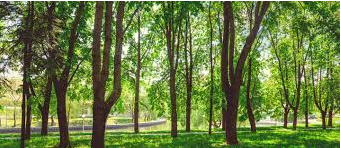
Credit: INP-WealthPk
Related Articles