




INP-WealthPk

Pakistan mango exports stay active as Iran, UAE and Oman dominate volumes
July 13, 2026
By Azeem Ahmed Khan
Pakistan’s mango exports remained active across a wide range of international destinations this season, with Iran, the United Arab Emirates, Oman and the United Kingdom emerging as major volume markets, according to an official document available with Wealth Pakistan.
The document shows that Pakistan exported 42,343 metric tonnes of mangoes from June 1 to July 6, 2026, compared with 44,092 tonnes during the same period last year. While overall volume was slightly lower, the number of phytosanitary certificates rose sharply to 4,984 from 3,751, reflecting continued export activity across multiple destinations.
Iran remained the largest buyer of Pakistani mangoes during the period, with exports reaching 19,342 tonnes against 7,858 tonnes in the same period last year. The United Arab Emirates followed with 9,245 tonnes, while Oman imported 6,003 tonnes.
The United Kingdom also emerged as a major destination, with exports recorded at 3,439 tonnes during June 1-July 6, 2026. The data showed no comparable UK export volume in the same period of 2025, making the country an important addition to this year’s export profile.
Several premium and high-value markets also showed encouraging movement. Mango exports to Japan increased to 232 tonnes from 48 tonnes in the same period last year, while shipments to the United States rose to 248 tonnes from 112 tonnes. Exports to Australia doubled to 100 tonnes from 50 tonnes, while Germany received 761 tonnes compared with 547 tonnes a year earlier.
Norway, Italy, Ireland, Malaysia, Spain and Sweden also recorded higher export volumes. Exports to Norway rose to 494 tonnes from 359 tonnes, Italy to 219 tonnes from 156 tonnes, Ireland to 109 tonnes from 74 tonnes, Malaysia to 99 tonnes from 82 tonnes, Spain to 76 tonnes from 50 tonnes and Sweden to 165 tonnes from 104 tonnes.
The data indicate that Pakistan’s mango export base is gradually becoming more diversified, with shipments reaching traditional Gulf markets as well as European, East Asian, North American and Australian destinations. Although exports to Afghanistan were lower than the 10,089 tonnes in the same window last year, higher volumes to Iran and continued shipments to other destinations helped keep the overall export flow active.
Among European markets, France received 86 tonnes compared with 71 tonnes a year earlier, Switzerland 47 tonnes against 44 tonnes and Denmark 62 tonnes against 22 tonnes. However, exports to the Netherlands declined to 23 tonnes from 36 tonnes, Greece to 30 tonnes from 42 tonnes and Belgium to 2 tonnes from 8 tonnes.
In Southeast Asian markets, Singapore recorded modest gains, with shipments rising to 27 tonnes from 22 tonnes.
The sharp decline in Gulf-bound shipments reflects weaker demand and trade disruptions triggered by the Iran-US tensions, which have unsettled regional markets, disrupted logistics and pushed up freight costs. Saudi Arabia imported 650 tonnes during June 1-July 6, 2026, down from 974 tonnes in the same period last year, while Qatar fell to 370 tonnes from 691 tonnes, Kuwait to 46 tonnes from 143 tonnes and Bahrain to 154 tonnes from 462 tonnes.
The document shows that Pakistan’s mango shipments to Japan, the United States, Australia and several European markets point to wider opportunities for growers and exporters. With better market access, improved treatment facilities and stronger logistics, Pakistan can use its prized mango crop to build a stronger presence in premium international markets.
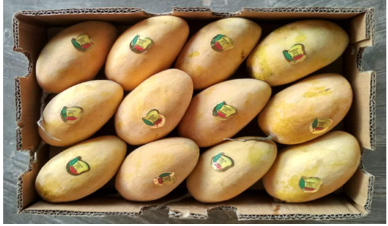
Credit: INP-WealthPk
Related Articles


