INP-WealthPk
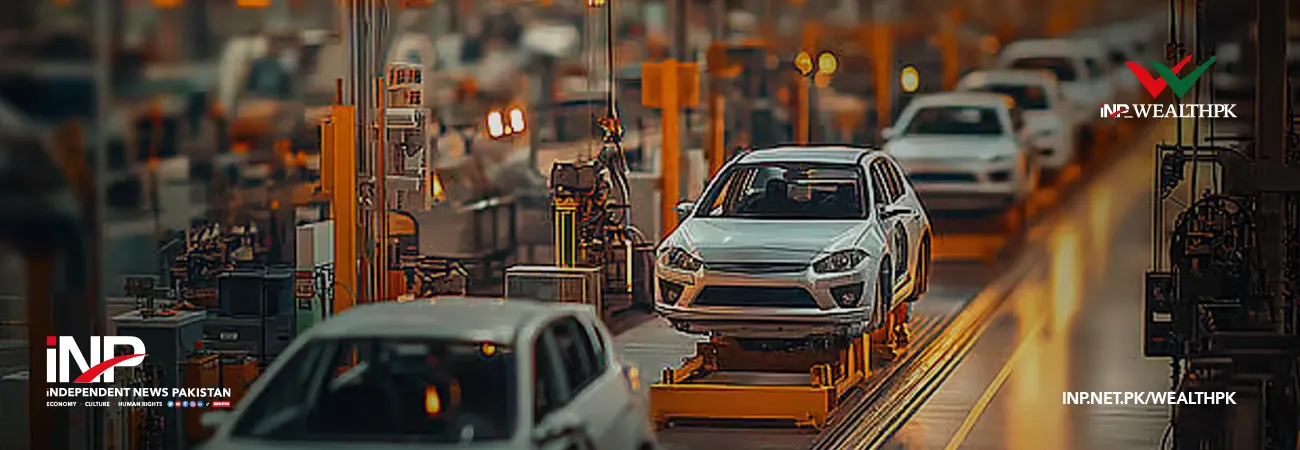
Pakistan’s automobile sector drives manufacturing rebound amid lower borrowing costs
May 18, 2026
By Qudsia Bano
Pakistan’s automobile industry emerged as one of the strongest contributors to the recovery in large-scale manufacturing during the first half of FY26, supported by lower borrowing costs, stable prices and stronger consumer demand, according to the State Bank of Pakistan’s Half Year Report 2025-26. The report said large-scale manufacturing expanded 4.8 percent during H1-FY26 after remaining in contraction during the previous three years.
Major contributors to the recovery included automobiles, textiles and petroleum products. According to the SBP, the automobile sector benefited from a combination of improving macroeconomic conditions and easing financing costs. The report said stronger domestic demand, relatively stable vehicle prices, promotional discounts and the launch of new vehicle variants — particularly in the SUV segment — supported growth in automobile production and sales during the review period.
Lower interest rates also improved affordability for consumers purchasing vehicles through bank financing. The SBP reduced the policy rate by 50 basis points in December 2025, taking cumulative easing since June 2024 to 1,150 basis points.
At the same time, inflation moderated significantly. Average National CPI inflation fell to 5.2 percent during H1-FY26 from 7.2 percent in the corresponding period last year.
The report said lower inflation and easing monetary conditions improved purchasing power and consumer confidence, helping revive demand for durable goods including automobiles. Pakistan’s broader industrial sector grew 8.1 percent during H1-FY26 compared with just 0.5 percent a year earlier. Construction activity and transport demand also supported automobile-sector performance.
The report noted that improved macroeconomic stability, exchange-rate stability and easing import restrictions helped manufacturers manage supply chains more effectively compared with previous years. Imports of transport-related goods increased during H1-FY26 following tariff rationalisation measures under the National Tariff Policy 2025-30.
The increase reflected rising industrial demand for automotive components, machinery and related equipment. The automobile sector’s recovery also boosted activity in related industries including steel, plastics, petroleum products and transportation services.
However, the SBP cautioned that risks to the sector remain elevated because Pakistan continues to depend heavily on imported components and external supply chains. The report warned that the ongoing conflict in the Middle East could affect industrial imports through higher freight charges, insurance costs and supply disruptions.
Rising international oil prices could also affect fuel costs and consumer demand for vehicles during the second half of FY26. The report further noted that Pakistan’s automobile sector still faces structural challenges related to competitiveness, technological upgrading and localisation of production.
Foreign direct investment also remains concentrated in low-risk sectors, including automobiles, rather than export-oriented manufacturing industries. Economists say the recovery in automobile production is an important signal because the sector often reflects broader trends in consumer confidence, industrial financing and domestic demand.
However, analysts cautioned that sustainable growth in the sector would require stable macroeconomic conditions, predictable trade policies and continued progress in industrial reforms. The SBP stressed that long-term industrial growth depends on improving productivity, strengthening investment conditions and increasing integration into regional and global value chains.
Credit: INP-WealthPk
Related Articles