




INP-WealthPk

Pakistan's cotton area falls 29% as maize, orchards and fodder expand
July 13, 2026
By Moaaz Manzoor
Pakistan's cotton area declined by 29% between the Agricultural Census 2010 and Agricultural Census 2024, even as maize, orchards, wheat and fodder recorded strong expansion, pointing to a major shift in the country's cropping pattern.
According to the Agricultural Census 2024 National Report of the Pakistan Bureau of Statistics, available with Wealth Pakistan, cotton area fell from 9.226 million acres in 2010 to 6.508 million acres in 2024. The decline is significant because cotton remains closely linked with Pakistan's textile value chain, export earnings and rural employment.
The census shows that the cropped area increased by 22%, rising from 67.908 million acres in 2010 to 82.771 million acres in 2024. However, the expansion was not evenly distributed across crops. Maize area increased by 76%, from 2.392 million acres to 4.200 million acres, while orchard area rose by 42%, from 1.136 million acres to 1.609 million acres.
Wheat area increased by 27%, reaching 35.816 million acres in 2024 compared with 28.227 million acres in 2010. Rice area rose by 15% to 10.715 million acres, while fodder area increased by 31% to 7.878 million acres. Sugarcane area showed only a marginal increase of 2%, rising from 2.629 million acres to 2.694 million acres.
The shift matters for policymakers because it shows that Pakistan's cropping system is changing, with food, feed and high-value crops gaining space while cotton has lost ground. For farmers, crop choices are influenced by water availability, prices, input costs, pest pressures and market returns. For industry, a contraction in cotton area can increase pressure on domestic raw material availability.
The report shows that wheat remained the dominant crop, accounting for 43.30% of the total cropped area. Rice accounted for 12.90%, fodder 9.50%, cotton 7.90%, maize 5.10%, oilseeds 3.70%, sugarcane 3.30%, pulses and orchards around 2% each, while other crops accounted for 7.80%.
Meanwhile, Punjab remained the hub of major crop cultivation. It accounted for 57.66% of the country's wheat area, 62.28% of the rice area, 58.89% of the cotton area, 68.72% of the sugarcane area, and 51.16% of the maize area. Sindh contributed 28.10% of the cotton area and 26.28% of the rice area, while Khyber Pakhtunkhwa accounted for 46.16% of the maize area.
The census also shows that the total cultivated area stood at 52.79 million acres in 2024, of which the net sown area was 50.90 million acres and the current fallow area was 1.89 million acres. Cropping intensity was 157% nationally, with Punjab recording the highest at 168%.
The findings suggest that Pakistan is producing on more cropped area than before, but the composition of that area is changing. For the textile-linked economy, the fall in cotton area is the key warning sign. For food security and farm diversification, the expansion of wheat, maize, fodder, and orchards indicates a different kind of adjustment already underway in the rural economy.
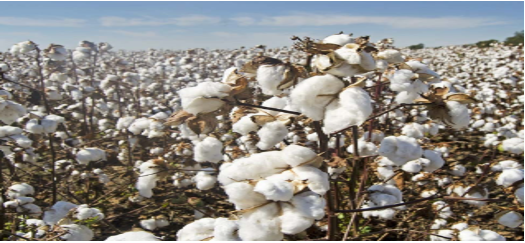
Credit: INP-WealthPk
Related Articles


