




INP-WealthPk

Pakistan's livestock population surges as goats approach 96 million
July 13, 2026
By Farooq Awan
Pakistan's livestock base expanded sharply between the Livestock Census 2006 and Agricultural Census 2024, with goats reaching 95.827 million and cattle rising to 55.863 million, underlining the growing importance of livestock in rural incomes, dairy supply and food security.
According to the Agricultural Census 2024 National Report of the Pakistan Bureau of Statistics, available with Wealth Pakistan, the goat population increased by 78%, from 53.787 million in 2006 to 95.827 million in 2024. Cattle rose by 89%, from 29.559 million to 55.863 million during the same period.
The data shows that buffaloes increased by 75%, from 27.335 million in 2006 to 47.738 million in 2024, while sheep rose by 68%, from 26.488 million to 44.585 million. The increase in these categories shows that livestock remains a central part of Pakistan's rural economy, particularly for small farmers and households that depend on milk, meat and animal sales for income.
The dairy-related numbers are especially important. In-milk cows increased by 140%, from 8.720 million to 20.931 million, while in-milk buffaloes rose by 111%, from 10.222 million to 21.564 million. These figures matter because milk production is one of the most direct links between livestock ownership, household nutrition and rural cash flow.
The report shows that cows aged three years and above increased by 112%, while female buffaloes aged three years and above rose by 92%. Youngstock below three years increased by 60% for cattle and 33% for buffaloes.
Among small ruminants, male goats aged one year and above rose by 169%, while female goats increased by 88%. Male sheep aged one year and above increased by 179%, while female sheep rose by 63%. These changes point to a major expansion of the animal base available for meat production, breeding, and household-level livestock activities.
Province-wise, Punjab dominated several livestock categories. It accounted for 48.28% of cattle, 61.92% of buffaloes, 32.67% of goats, 45.42% of horses, 32.54% of mules and 49.05% of asses. Balochistan had the largest share of sheep at 42.20% and camels at 51.06%.
The report also records increases in draught animals. Camels rose by 64% from 920,868 in 2006 to 1.511 million in 2024. Horses increased by 61% to 553,256, mules by 90% to 296,135, and asses by 15% to 4.899 million.
The livestock expansion is important for readers because it affects milk prices, meat supply, rural livelihoods and the demand for fodder, veterinary services and animal health infrastructure. However, larger livestock numbers also require better disease control, feed management, breed improvement and market access.
The census indicates that livestock policy cannot be treated as a secondary part of agriculture. With goats, cattle, buffaloes and sheep all recording large increases, the sector now requires stronger planning for productivity, value addition and rural income protection.
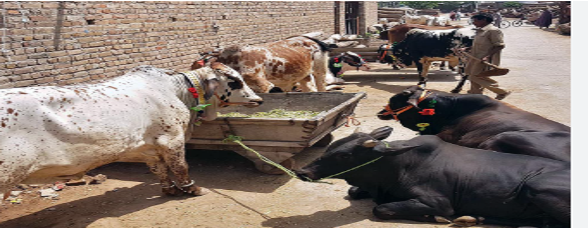
Credit: INP-WealthPk
Related Articles


