




INP-WealthPk

Pakistan’s tractor count jumps 146% as farm mechanisation expands
July 13, 2026
By Moaaz Manzoor
Pakistan’s tractor count surged 146% between the Agricultural Machinery Census 2004 and Agricultural Census 2024, marking a major leap in farm mechanisation, though the machinery base remains heavily concentrated in Punjab.
According to the Agricultural Census 2024 National Report of the Pakistan Bureau of Statistics, available with Wealth Pakistan, the total number of tractors increased from 401,663 in 2004 to 986,998 in 2024. The census also notes that the number stood at 252,861 in 1994, rising by 59% between 1994 and 2004 and by 146% between 2004 and 2024.
The increase matters because tractors are central to land preparation, timely sowing, harvesting support and overall farm efficiency. A larger machinery base can help farmers manage labour shortages, reduce delays and improve cultivation practices, especially where farm operations are time-sensitive.
Punjab accounted for the largest share of tractors, with 777,404 units, or 78.8% of the national total. Sindh had 85,895 tractors, Khyber Pakhtunkhwa 61,113, Balochistan 61,368 and Islamabad Capital Territory 1,217. The report notes that Islamabad Capital Territory was part of Punjab in the 1994 and 2004 machinery censuses.
The province-wise pattern shows that while mechanisation has expanded nationally, access remains uneven. Punjab’s overwhelming share reflects its larger cultivated area, stronger machinery market and more intensive farming system. In contrast, smaller tractor bases in other provinces may affect timely farm operations and mechanised service availability.
Balochistan recorded the steepest growth rate over the longer period. The number of tractors in the province increased from 9,244 in 2004 to 61,368 in 2024, showing a 564% increase. Khyber Pakhtunkhwa recorded a 152% increase, Sindh 137%, and Punjab 134%.
The report also provides ownership details. Out of 986,998 tractors recorded in 2024, 778,501 were owned individually, 207,092 jointly, and 1,404 by cooperative societies. This shows that individual ownership remains the dominant model, though joint ownership is also important in areas where machinery costs may be shared among farmers.
The make-wise tractor data shows that Massey Ferguson accounted for 519,653 tractors, followed by Fiat with 343,669. Belarus tractors stood at 44,481, New Holland at 30,665, Ford at 17,952, IMT at 3,393 and others at 27,183.
The census also shows growth in key industries. Cultivators increased by 161%, from 369,866 in 2004 to 966,547 in 2024. Rotavators increased by 279%, while chisel ploughs rose by 837%. Disk ploughs increased by 103%, though disk harrows and ridgers declined by 28% and 24%, respectively.
The findings suggest that Pakistan’s farm mechanisation has deepened significantly, but not evenly. For policymakers, the next issue is not only the number of tractors, but whether small and fragmented farms can access machinery services at affordable rates. Mechanisation can raise productivity only when equipment is available where farmers need it and when farm size, credit and service markets support its use.
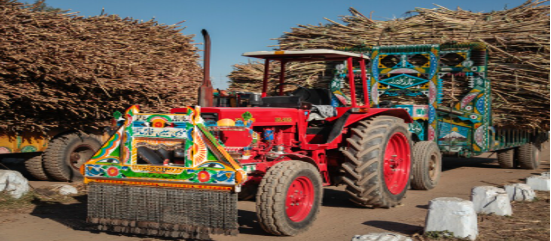
Credit: INP-WealthPk
Related Articles


