


INP-WealthPk
Value-added products now make up 80% of Pakistan’s textile exports
September 02, 2026
By Muhammad Luqman
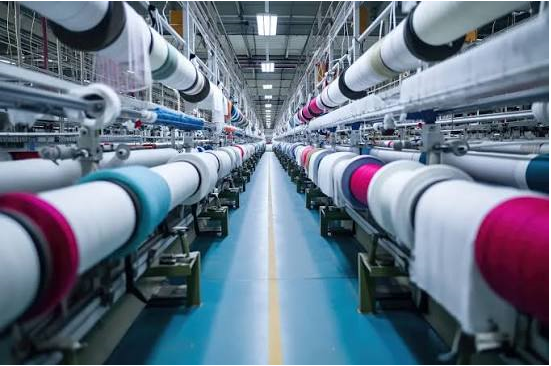
Pakistan’s textile exports have evolved far beyond raw cotton, yarn or grey fabric. Today, value-added products account for more than 80 per cent of the total, reflecting a significant shift towards higher-value manufacturing and greater integration into global markets.
“Pakistan is now one of only three countries in the world, along with China and India, with a complete textile value chain,” said Kamran Arshad, Central Chairman of All Pakistan Textile Mills Association (APTMA).
In an interview with Wealth Pakistan, he said Pakistan’s textile exports is now heavily concentrated in value-added products, with knitwear, readymade garments and bedwear accounting for the largest shares of the country’s textile export basket.
During the last fiscal year, knitwear emerged as the leading textile export category, with exports valued at $5.01 billion, representing 28.0 per cent of the textile group’s total exports of $17.89 billion.
Readymade garments ranked second, contributing $4.13 billion, or 23.1 per cent, while bedwear generated $3.11 billion, accounting for 17.4 per cent of total textile exports.
Cotton cloth exports declined to $1.81 billion, making up 10.1 per cent of the textile group. Cotton yarn contributed only $680.7 million, or 3.8 per cent of exports.
However, Arshad said there were certain anomalies in the share of domestic value addition in exports.
“For example, a T-shirt may be stitched in Pakistan using imported fabric. It is classified as a value-added export, but a major portion of its value has been added abroad, and Pakistan retains only a limited share of the foreign exchange earned,” he explained.
Unfortunately, the APTMA chairman said, policies over the past three to four years, particularly the exclusion of local supplies from the Export Facilitation Scheme, have created a strong incentive to import inputs.
He said Pakistan’s textile exports could increase significantly by improving conditions in three key areas: energy costs, taxation and interest rates.
“Industrial electricity costs around 11–12 cents per kWh in Pakistan, compared with 4–9 cents per kWh in other countries in the South Asian region,” he said.
To boost Pakistan’s textile exports to affluent European markets, he said Pakistan needs to pursue a free trade agreement with the European Union while continuing to benefit from the GSP+ programme.
He said Pakistan has still not utilised a major portion of the tariff lines available under GSP+, which means there remains significant room for further expansion and diversification.
“The United States is also offering concessions to Bangladesh on products manufactured with American cotton. Pakistan should seek similar terms,” Arshad said.
He said there was also a need to improve access to and penetration of non-traditional markets, including East Asia, Africa and Central Asia.
On efforts to increase cotton production in Pakistan, Arshad said APTMA had recently shared an eight-point plan with federal and Punjab governments to revive Pakistan’s cotton sector.
He said the plan calls for establishing a Pakistan Cotton Board to serve as a central body for coordinating cotton research and development. The proposed board would align research priorities, promote public-private partnerships and help accelerate the adoption of new technologies.
Under the cotton revival plan, cotton cess funds currently allocated to the Pakistan Central Cotton Committee would be transferred to a Pakistan Cotton Board-led research system.
The proposed reforms further seek to streamline the approval of new cotton varieties by removing licensing delays and working with the United States Department of Agriculture to utilise expired patents covering three generations of cotton varieties.
According to the plan, this could accelerate the release of high-performance varieties and improve access to advanced genetically modified technologies.
To improve the credibility of Pakistani cotton in international markets, the plan also proposes a cotton track and traceability system, the APTMA chairman said.
Credit: INP-WealthPk
Related Articles