




INP-WealthPk

China’s digital tourism platform offers Pakistan insights to improve services for foreign visitors
May 20, 2026
By Azam Tariq
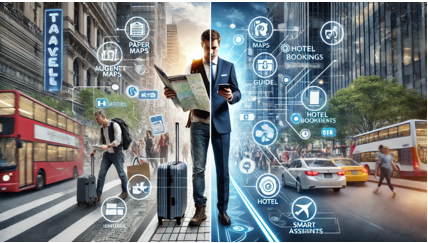
Experts have said that Beijing’s launch of the ‘GO BEIJING’ digital tourism platform (one-stop digital service platform for foreign visitors) offers insights for Pakistan as the country seeks to improve services for foreign visitors, strengthen digital facilitation and convert its natural, cultural and heritage assets into a more competitive tourism economy.
According to Xinhua News Agency, the platform has been jointly built by Beijing’s Municipal Government Service and Data Authority and Alipay (a Chinese digital wallet and mobile payment app), in cooperation with culture, tourism, commerce and tax departments. It enables overseas visitors to access 39 services in 16 languages, including ride-hailing, ticket booking, hotel reservations, an AI tour companion and a travel wallet that allows cross-border fund transfers for payments in China.
Experts say the model is relevant for Pakistan, where tourism is increasingly seen as a source of foreign exchange, employment and regional development.
According to Statista (a global data and market research platform), Pakistan’s online sales are projected to account for 66 per cent of total tourism revenue by 2029.
Speaking to Wealth Pakistan, Mirza Amir, a faculty member at the University of Punjab and College of Tourism and Hotel Management, Pakistan, said Beijing’s digital platform showed that tourism competitiveness now depends not only on destinations themselves, but on how easily visitors can move, pay, communicate and access services.
He said Pakistan should study the ‘single-window’ structure of ‘GO BEIJING’ rather than treating tourism services as separate, disconnected functions. A foreign visitor to Pakistan still often has to arrange transport separately, search for reliable hotels, deal with inconsistent card acceptance, register a SIM manually and carry cash for routine purchases, he explained.
Mr Amir, who is also the founder of NextGen Hospitality Solution Pakistan (an institution focused on delivering customised hospitality, education and training programmes), said a Pakistan-focused travel wallet, supported by the State Bank and developed with banks, Fintechs and international card schemes, could help visitors pre-load funds before arrival and make payments across hotels, transport, restaurants and tourism sites. Such a system, he added, would reduce first-day uncertainty and improve the overall visitor experience.
He said multilingual access should also be treated as a market-entry tool, not a cosmetic feature. “Beijing’s platform supports languages, including English, Russian, Korean and Arabic, while Pakistan’s potential source markets include China, the Middle East, Central Asia and Europe,” he said.
A largely English-only digital tourism interface, he said, risks limiting Pakistan’s outreach to some of the world’s most important outbound travel markets.
Pakistan has already taken steps toward digital promotion. In February 2026, Vivo, a mobile phone company, and the Pakistan Tourism Development Corporation announced a partnership to digitally showcase Pakistan’s tourism potential through storytelling, capacity building and training initiatives, with PTDC saying the collaboration would help present the country’s diverse identity to a global audience.
Ameer Hamza Khan, founder of PaharbyHK, which manages tours, events and corporate travel across Pakistan, told Wealth Pakistan that China’s most valuable experience is its ability to bring trusted information and services together under one unified roof.
He said tourists in Pakistan often have to move between several platforms to check transport, book accommodation, find credible information or pay for services.
He said digital infrastructure was no longer an optional convenience. “For international visitors, inability to pay digitally or overcome language barriers creates anxiety and dependence on local intermediaries. A reliable national interface for rides, rooms, payments, ticketing and verified service providers would make Pakistan easier and more attractive for first-time visitors.”
Khan said the government should provide the regulatory framework and digitised public data, including visa APIs, application programming interface, and heritage-site ticketing, while the private sector should drive technology design and user experience.
He said localised digital payments were especially important so that a foreign card worked as smoothly in a mountainous valley as in a major city.
Pakistan’s online visa system already provides a base for wider integration, as the official Pakistan visa portal says it is open to citizens of 192 countries. Integrating visa approval, arrival support, payments, verified operators and destination information into one visitor-facing system could help turn digital access into actual tourism spending.
Credit: INP-WealthPk
Related Articles