




INP-WealthPk

KSE-100 ends FY26 with 43.5% gain as resilient market shrugs off geopolitical shocks
July 03, 2026
By Moaaz Manzoor
Pakistan's stock market shrugged off geopolitical tensions, higher oil prices and monetary policy uncertainty to deliver one of its strongest fiscal-year performances in recent years, with the benchmark KSE-100 Index gaining 54,674 points, or 43.5%, to close FY2025-26 at 180,302.
According to Arif Habib Limited (AHL), the benchmark returned 43.5% in rupee terms and 46.4% in US dollar terms during FY26, supported by improving corporate earnings, stronger investor participation and gradually stabilising macroeconomic conditions. Most of the gains came during the first half of the fiscal year, when benchmark profitability grew 3.3% and the index delivered a return of 38.5%. Although momentum slowed in the second half because of tensions between the United States and Iran and higher international oil prices, the market still added another 3.6% before closing the fiscal year at a record high.
The final month of the fiscal year proved particularly important in lifting the benchmark above the 180,000-point mark. According to Topline Securities, the KSE-100 rose 3.6% during June as investor sentiment improved following the ceasefire and peace agreement between the United States and Iran. Easing geopolitical tensions reduced concerns over regional instability and oil price volatility, encouraging investors to increase their exposure to equities.
The improving sentiment coincided with encouraging economic indicators. Pakistan's trade deficit narrowed to $2.58 billion in May, workers' remittances climbed to $4.3 billion, while the country recorded a current account surplus of $459 million after posting a deficit a month earlier. Although inflation edged up to 11.66% from 10.89% in April, investors largely viewed the broader macroeconomic picture as supportive for equities, Topline Securities said.
The rally was broad-based across sectors rather than being driven by only a handful of stocks. Automobile parts emerged as the best-performing sector during FY26 with gains of 278%, followed by the woollen, fertilizer, synthetic and tobacco sectors. In contrast, cable and electrical goods, food and vanaspati were among the few sectors that ended the year in negative territory.
Among individual companies, Bank of Punjab led the market with gains of 278%, followed by Pakistan Telecommunication Company, JVDC, Askari Bank and Pakistan International Bulk Terminal. On the losing side, SS Oil Mills posted the steepest decline, followed by IBFL, TPLRF1, PGLC, Sui Southern Gas Company and BNWM.
Strong investor participation remained a defining feature of the fiscal year. Technology stocks accounted for the highest average trading volumes, followed by power, banking, investment banking and food companies. FNEL, K-Electric, WorldCall Telecom, Bank of Punjab and Cnergyico dominated trading volumes, while banks led in terms of trading value, ahead of exploration and production companies, cement, technology and oil marketing firms. Pakistan Petroleum Limited, National Bank of Pakistan, Oil and Gas Development Company, Pakistan State Oil and Bank of Punjab ranked among the most actively traded stocks by value.
Despite the rally, foreign investors remained net sellers during FY26, pulling out $851 million, mainly from cement, food and banking stocks. Domestic institutional investors, however, continued to provide liquidity to the market. During June, mutual funds emerged as net buyers of equities worth $46 million, while insurance companies and individual investors remained net sellers, according to Topline Securities.
Ali Najib, Deputy Head of Trading at Arif Habib Limited, described FY26 as a landmark year for the Pakistan Stock Exchange.
"The rally was driven by ample liquidity, attractive valuations across key sectors and resilient investor sentiment despite intermittent geopolitical volatility," he said.
Looking ahead, Najib said lower international oil prices and growing expectations of interest rate cuts could provide further support to equities. However, inflation, the State Bank's policy direction and geopolitical developments would remain the key factors determining market performance in the coming months.
AHL also expects the positive momentum to continue into FY27, supported by projected earnings growth of 10-11%, improving liquidity and stable macroeconomic conditions, although it cautioned that external geopolitical risks could still influence investor sentiment.
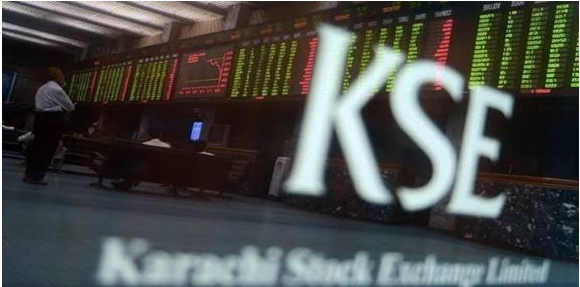
Credit: INP-WealthPk
Related Articles