


INP-WealthPk
Pakistan, Austria urged to launch joint ventures in textiles, tech outsourcing
February 26, 2026
Hasan
Experts have urged Pakistan to build on its notable trade growth with Austria in 2024 by launching joint projects, especially in textiles, tech outsourcing and green energy.
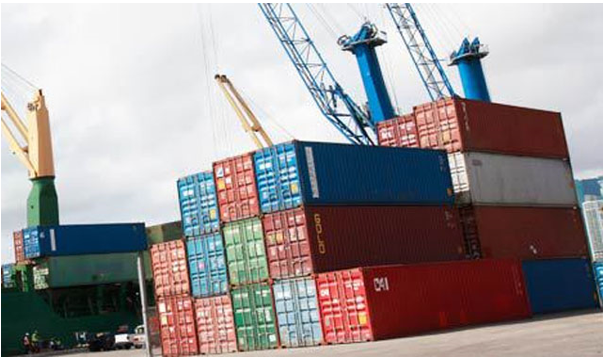
Speaking with Wealth Pakistan, Dr Zafar Mahmood, Principal & Dean, School of Social Sciences and Humanities, National University of Sciences & Technology (NUST), pointed to recent gains, saying, “The total bilateral trade between Pakistan and Austria in 2024 grew by over 30%, with goods trade significantly in Pakistan’s favour. Pakistan exports apparel and textiles worth around €300 million to Austria annually, while importing machinery, fibres, and chemical products worth about €100 million.”
“Pakistan needs to produce and export high-end textile products to further increase its export earnings. By opening a window for Austrian imports of textile machinery and chemicals, the European country can become a reliable trade partner,” Mahmood said.
Beyond textiles, he said, the services and hospitality industries also have great growth potential. “Pakistan’s hospitality industry needs significant improvement in infrastructure,” he said.
On industrial services, he added, “IT and manufacturing industries can progress through collaborative outsourcing activities. This would need lowering of tariffs and a significant improvement in trade facilitation.” He also warned: “Pakistan should learn to export on the basis of its competitive strength and not by relying on schemes like GSP+ because it’s a recipe for failure in the long run.”
Pakistan’s leadership courted Austrian businesses at the Pakistan-Austria Business Forum held in Vienna recently, pitching renewable energy, value-added agriculture, mining and tourism as potential sectors for trade and investment, while Austria’s Federal Economic Chamber highlighted cooperation potential in hydropower, rail infrastructure and digital transformation.
Pointing to the importance of institutional follow-through, Taimur Khan, Research Associate (Europe & Russia), Institute of Strategic Studies Islamabad (ISSI), said the first step is making engagement institutional. “Pakistan and Austria can increase overall bilateral trade by institutionalising economic engagements through regular trade consultations or forming a joint economic commission that identifies priority sectors and ensures follow-up implementation,” he noted while talking to Wealth Pakistan.
He also urged both sides to promote sector-specific business-to-business forums both in Vienna and major Pakistani commercial centres to directly connect firms rather than relying solely on diplomatic channels.
Khan said export growth will depend on value addition and standards readiness. “Pakistan can better leverage its GSP+ access to the European Union by focusing on high-quality, value-added exports such as textiles, surgical instruments, sports goods, and selected agri-products tailored to Austrian niche markets,” he said, adding that strengthening Pakistan’s certification and compliance capacity to meet EU environmental and technical standards is essential for sustained export growth.
On the strongest sector match, Khan said, “The strongest Pakistan-Austria match for business collaboration lies in technology, digitalisation, and green transition sectors.” But he said moving from dialogue to deals will require tackling “regulatory complexity, bureaucratic delays (mostly on the Pakistani side), and compliance gaps with EU standards,” alongside concerns about “policy continuity and macroeconomic stability.”
Credit: INP-WealthPk