


INP-WealthPk
Extreme weather threatens Pakistan’s mango production this year
April 20, 2026
By Azeem Ahmed Khan
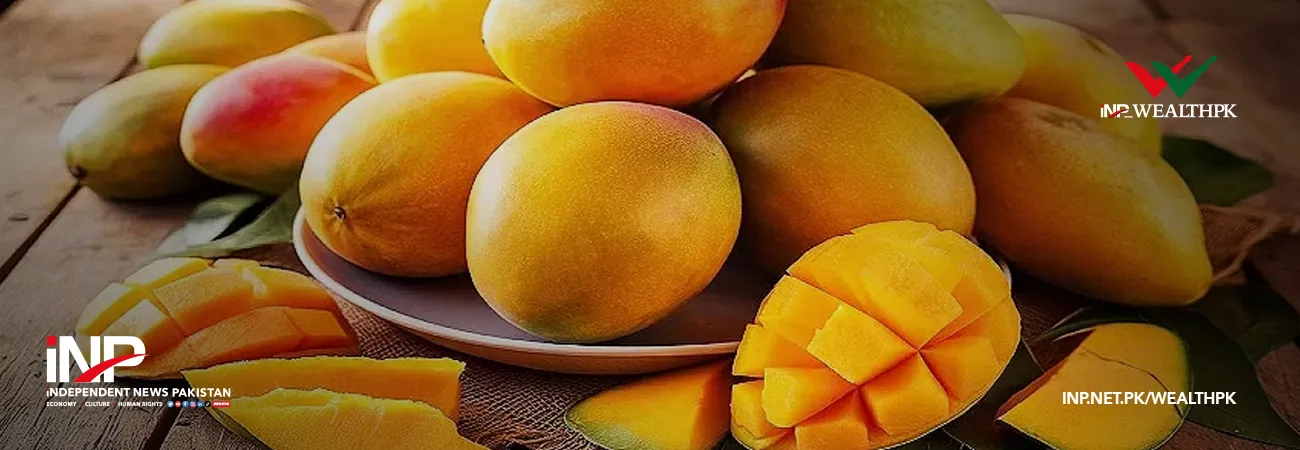
Pakistan’s mango production is expected to remain low this year as extreme weather events and climate change impacts have severely damaged flowering and fruit formation across key growing regions in Punjab.
“On March 3–5, there was an early heatwave in Punjab’s mango belt which I have never observed in my life,” said Abdul Ghaffar Grewal, a mango consultant and former director of Mango Research Institute, Multan, while talking to Wealth Pakistan. “Temperature suddenly rose to 38–39°C for a few days, drying up open flowers, especially in the Rahim Yar Khan belt.”
He explained that the unusual heatwave was followed by an equally abnormal temperature drop to 15 degrees centigrade after flowering, a phenomenon that disrupted pollination. “The male part of the flower became inactive, leading to no fertilisation and ultimately no fruit formation,” he added.
Grewal said the impact varies across varieties but is particularly severe for Summer Bahisht Chaunsa, which accounts for over 35% of Punjab’s mango crop. “Its condition is not good at all. I have never seen such a bad situation despite heavy flowering,” he noted. The Late Ratol variety has also seen its trees “completely cleaned,” while Sindhri remains relatively better in some areas like Rahim Yar Khan but weak in Multan and other belts.
He said around 30% of the mango crop in Punjab has been affected, with additional damage caused by increased mango malformation disease due to prolonged cooler conditions. “I have seen crops damaged by harsh summers, but this is the first time I have seen such destruction due to cooler weather,” he remarked.
The situation has been worsened by pest attacks, particularly hopper infestations, which persist due to irregular spraying cycles caused by rainy conditions and limited farmer resources. Hailstorms in parts of Multan, Nawabpur, Kabirwala and Khanewal have further damaged orchards, creating a belt of severe destruction.
Echoing these concerns, Zafar Mahay, President of Multan Mango Growers Association, agreed that recent hailstorms and erratic weather have caused widespread losses across southern Punjab.
“In some areas, there is a significant loss, while in others it is about 40%,” he said. “Cold and rain first damaged the flowers, and then the fruit that had formed was destroyed by hailstorms, with hailstones as large as eggs reported in several areas.”
He noted that extreme weather fluctuations, from prolonged cold affecting pollination to sudden heat spikes burning flowers, have severely reduced fruit set. “Cross-pollination was also affected due to reduced activity of honey bees and flies during the cold spell,” he added.
Mahay said the key variety, Summer Bahisht Chaunsa, has been badly hit. “Because of cold weather, mango malformation has increased significantly. This disease is eating the plant’s nutrition and has devastated growers,” he said.
He warned that labour shortages during the wheat harvesting season are also hampering efforts to control malformation, as repeated cutting is required to manage the disease.
Both experts pointed out that climate change has been increasingly affecting mango production since 2022, with the last three years witnessing repeated shocks. This year, even traditionally stable areas like Khanewal have suffered heavy damage.
With multiple climate stresses — heatwaves, cold spells, hailstorms, pests, and diseases — hitting simultaneously, growers fear that mango production will remain significantly below normal levels, raising concerns for both domestic supply and exports.
Credit: INP-WealthPk